by Swarthmore College student and Need in Deed summer intern Amy Roblero Perez
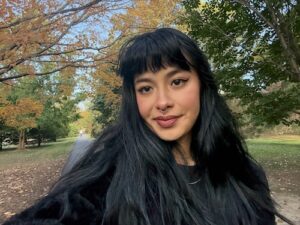
Hello everyone! My name is Amy Roblero Perez. I’m a rising junior at Swarthmore College majoring in sociology and anthropology, and this summer I’ve had the opportunity to intern with Need in Deed!
Before joining Need in Deed as a summer intern, I first encountered its work during my sophomore fall semester, when I completed a field placement in a fifth-grade classroom as part of a course I was taking, Introduction to Education: Power and Pedagogy. Returning this summer as an intern has felt like coming full circle, reminding me why I believe so deeply in the power of this kind of education.
One project I will never forget centered on immigration and its impact on the students’ community. After reading Esperanza Rising by Pam Muñoz Ryan, learning about human rights, and discussing immigration enforcement, students decided they wanted to do more than keep this knowledge within the walls of the classroom; they wanted to act. They created beaded keychains spelling “ICE OUT” and “JUNTOS” with whistles attached, inspired by the ways neighbors use whistles to alert one another when ICE is nearby. The students sold the keychains to raise money for Juntos, a local immigrant rights organization, transforming classroom learning into an act of community care.
As someone from a mixed-status family who has experienced the removal of a parent, this project resonated deeply with me. Growing up in a small town in Kentucky, conversations about immigration were often met with silence or discomfort, especially at school. Watching fifth graders thoughtfully examine these issues, ask difficult questions, and organize around something that directly affects them and their community reminded me of what education can become when students are trusted with meaningful questions and receive genuine answers.
These students reminded me that education is not only about acquiring knowledge but about understanding what that knowledge asks of us. Knowledge is power, but power is also responsibility. It is the responsibility to stand beside our neighbors, to care for our communities, and to transform understanding into action. Experiences like this have deeply shifted how I think about teaching and learning. Students have gifts that cannot be measured by grades alone.
I left Kirkbride believing that intellectual curiosity, community impact, and joy are inseparable. Curiosity leads us to ask why the world is the way it is. Those questions awaken a desire to change it. And when that change is pursued collectively, through compassion, solidarity, and action, it creates joy. Not the fleeting joy of getting the right answer, but the lasting joy of knowing your voice matters, your community matters, and together you can build something better.
Need in Deed showed me what that kind of classroom looks like. When students see that what they learn is connected to the world around them, academic learning becomes deeply personal. It becomes something that serves not only their academic performance, but their souls. The students reminded me that young people are not simply the leaders of tomorrow; they are already forces of movement. If we continue to listen to them, support them, and learn alongside them, together we can reach a world where joy is for all.